Quick answer: Florida demolition should be planned as a site-transition project, not just a teardown. The scope needs to define what is being removed, what must remain, how utilities are handled, what permits and environmental reviews apply, how debris leaves the site and what condition the property must be in for grading, excavation or new construction.
Florida demolition planning checklist
| Phase | Key questions |
|---|---|
| Scope | Full structure, selective interior, slab, pool or combination? |
| Protection | What trees, fences, utilities, neighboring structures and surfaces must remain? |
| Utilities | Who locates, disconnects, caps or abandons water, sewer, power, gas and communications? |
| Permits | What does the city or county require before demolition starts? |
| Environmental | Are asbestos, lead, tanks or other regulated materials possible? |
| Access | Can equipment and trucks safely enter, load and leave? |
| Debris | What is separated, recycled, hauled and disposed of? |
| Handoff | Is the site left rough, graded, stabilized or foundation-ready? |
1. Define exactly what is being demolished
A quote for “demolition” can mean very different things. Full-structure removal is different from selective interior demolition, slab removal, pool removal or removing an addition while preserving the rest of the house.
Identify what stays before equipment arrives. That includes adjoining walls, trees, fences, septic components, wells, driveways, neighboring structures and utility connections.
305 field note: The most useful demolition scope describes the finished condition, not just what machine will be on-site. “House removed” and “lot ready for foundation layout” are very different deliverables.
2. Coordinate utilities before demolition
Water, sewer, electrical, gas and communications must be addressed before the structure is removed. The exact process depends on the property, utility provider and jurisdiction.
For underground locating, the Florida Public Service Commission directs excavators to call 811 before digging so participating utilities can mark underground facilities. Utility locating does not replace project-specific disconnect, abandonment or capping requirements, so the demolition plan should identify both.
3. Verify permits and local requirements
Permit requirements vary by jurisdiction and project type. The Florida Building Commission is a statewide code reference, but the local authority having jurisdiction controls the actual demolition permit, inspections and required documentation.
Ask who is responsible for submitting the demolition permit, utility-release documentation, notices, inspections and final closeout. If the site will be rebuilt immediately, also confirm what documents the new-construction permit will need from the demolition phase.
4. Identify environmental concerns before teardown
Older structures may contain materials that need separate assessment or handling. The U.S. EPA explains that asbestos requirements vary by building type and project, and state or local rules can also apply. EPA also advises that older housing may contain lead-based paint and that demolition dust should be controlled appropriately.
Do not assume ordinary debris-hauling procedures apply to suspected regulated materials. Identify the issue before demolition so testing, removal and disposal responsibilities are clear.
5. Plan equipment, truck access and neighbor protection
Demolition needs room for equipment to work and trucks to load safely. Tight residential lots may require more selective work, temporary fencing, dust controls, traffic planning or protection of adjoining surfaces.
Consider overhead utilities, narrow streets, school or neighborhood traffic, landscaping to remain, driveway load limits and where trucks can queue without blocking neighboring properties.
6. Define dust, debris and cleanup responsibilities
The proposal should state whether debris will be sorted, recycled, stockpiled, loaded and hauled. Concrete, metal, vegetative material and general construction debris may be handled differently.
Dust control is also part of site management. Older painted surfaces, dry masonry and fine debris can create significant dust if the work is not managed carefully.
7. Decide what happens to slabs, foundations and below-grade material
A “clear lot” can still contain slabs, footings, buried concrete, old utilities or unsuitable fill. If new construction is planned, the demolition scope should specify whether these materials are removed and how excavated areas are backfilled.
Pool demolition needs the same clarity. The scope should define what is removed, what is broken in place if allowed, how the cavity is filled and what future use the area must support.
8. Protect drainage during and after demolition
Removing a structure changes roof runoff, soil exposure and the way water moves across the property. A site that was previously protected by roofs, pavement and landscaping can become an erosion or ponding problem after teardown.
If large areas of soil will be disturbed, stormwater and erosion-control requirements may apply. The Florida Department of Environmental Protection construction activity guidance provides the statewide framework for projects that meet permit thresholds.
9. Build the next phase into the demolition scope
After demolition, the site may need excavation, grading, drainage, stabilization or utility work. If a new home is planned, connect the demolition scope directly to Residential New Construction rather than treating teardown and rebuild as unrelated projects.
Residential vs. commercial demolition
305 Underground Construction handles both Residential Demolition and Commercial Demolition. Commercial sites often add access, staging, traffic and larger debris-volume considerations, while residential projects often require tighter protection around neighbors and existing improvements.
What changes demolition cost?
- structure size and construction type;
- selective versus full demolition;
- equipment access;
- utility work;
- regulated materials;
- slab, pool or foundation removal;
- debris volume and haul distance;
- dump fees;
- dust, fencing and traffic controls;
- grading and stabilization after removal.
What should a demolition quote include?
- exact demolition limits;
- items that remain protected;
- utility disconnect and locate responsibilities;
- permit and inspection responsibilities;
- environmental testing or exclusions;
- equipment and access assumptions;
- debris loading, hauling and disposal;
- slab, footing, pool or underground removals;
- dust, fencing or traffic controls;
- backfill, grading and final handoff condition.
Florida demolition questions
Should utilities be marked before demolition?
Yes when excavation or ground disturbance is involved, but utility locating is only one step. The project also needs the appropriate service disconnects, caps or abandonments before demolition proceeds.
Does a residential demolition need an asbestos review?
Requirements depend on the building and project. EPA notes that federal asbestos rules do not apply identically to every small residential demolition, while state and local rules may still apply. Suspected materials should be evaluated before they are disturbed.
What does “site ready” mean after demolition?
It should be defined in the proposal. It may mean debris removed only, slabs and footings removed, rough grade restored, erosion controls installed, or the site prepared for immediate excavation and foundation work.
Can demolition and new construction be quoted together?
Yes when the scopes are coordinated. Doing so can make the required handoff clearer because the demolition team knows exactly what the foundation and site crews need next.
See a real residential demolition
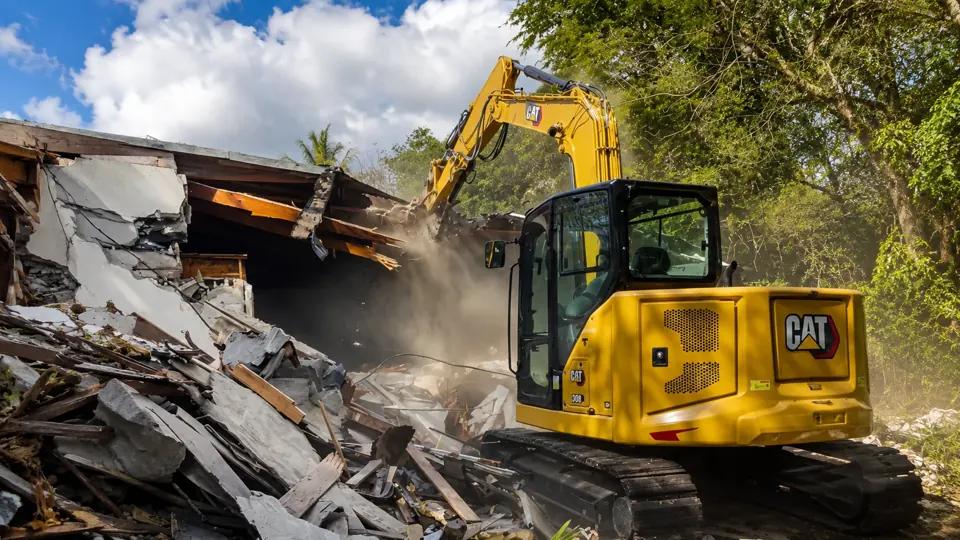
Our Cutler Bay residential demolition project documents controlled structural teardown, patio and exterior removal, debris loading and haul-off, and final lot clearing for the next phase.
Demolish with the next project in mind
The best demolition scope does more than remove a structure. It leaves the property ready for what happens next.
Request a demolition site walk with 305 Underground Construction to review utilities, access, debris, protection and the site-ready handoff.