Quick answer: Florida driveway problems usually fall into three categories: surface wear, structural/base failure and drainage failure. Crack sealing or patching can make sense for isolated defects. Resurfacing can work when the base is stable but the surface is worn. Full replacement is usually the better path when there is widespread alligator cracking, deep settlement, repeated potholes or base failure.
Repair vs. resurface vs. replace
| Condition | Likely direction | Why |
|---|---|---|
| Isolated cracks or small potholes | Repair / maintenance | Localized defects may not justify rebuilding the full pavement section. |
| Worn surface with a stable base | Resurface / overlay | A new wearing course can restore the surface when the structure below is sound. |
| Alligator cracking, soft areas, deep settlement | Replace / rebuild | Surface work alone does not correct a failing base or subgrade. |
| Standing water or runoff damage | Correct drainage first | Water can recreate the same failure after new asphalt is installed. |
1. Read the failure pattern before choosing the repair
Cracks tell a story. A single crack near an edge is different from interconnected alligator cracking across a large area. Settlement around a utility trench is different from a driveway that consistently holds water after rain.
305 field note: Replacing the black surface without correcting a weak base or drainage problem often leaves the original failure mechanism in place.
Common signs of surface wear
- light oxidation and fading;
- small isolated cracks;
- minor raveling at the surface;
- localized potholes where the surrounding pavement remains firm.
Common signs of deeper failure
- alligator cracking across broad areas;
- soft spots or pumping under vehicle loads;
- repeated potholes in the same location;
- deep depressions or wheel-path settlement;
- pavement breaking apart near washed-out edges.
2. Check drainage before choosing a paving scope
Look for standing water, runoff crossing the driveway, washed-out edges, roof downspouts discharging onto pavement and low areas that collect water. If the grade is wrong, fix the water path before investing in a new surface.
The Florida Department of Environmental Protection construction activity guidance explains why disturbed sites need runoff and erosion controls when work reaches the scale covered by state stormwater rules. Smaller residential projects may not trigger the same requirements, but the basic principle still matters: water movement should be planned before soil and pavement are disturbed.
For broader property drainage issues, see our Florida stormwater drainage guide and Drain & Sewer service.
3. Understand what the base is doing
Asphalt is only the wearing surface. The base and subgrade support the load. Soft soil, poor compaction, trapped water and inadequate base thickness can cause cracking and settlement even when the asphalt itself was installed correctly.
When a driveway is rebuilt, the contractor should identify how failed material will be removed, how the grade will be re-established, what base material will be used and how each layer will be compacted before paving.
4. When resurfacing makes sense
An overlay can be appropriate when the existing pavement is structurally stable, drainage is working and distress is mostly at the surface. Preparation may include cleaning, milling transitions, repairing isolated failed areas and establishing proper tie-ins before the new lift is placed.
Resurfacing is usually a poor fit when large portions of the pavement are moving, settling or cracking from below. Covering structural failure can make a driveway look new temporarily without changing the underlying cause.
5. When full replacement is the better option
Replacement is more appropriate when defects point to structural failure. That can mean removing asphalt, excavating failed base, correcting grade, placing and compacting new material and rebuilding the pavement section.
Full replacement can also make sense when a driveway layout is changing, underground work has cut through large portions of the pavement, or the finished elevation needs to change to correct drainage or garage transitions.
6. Pay attention to edges and transitions
Driveway edges fail when they are repeatedly driven over without support, eroded by runoff or left too high or low relative to surrounding grade. Garage slabs, sidewalks, aprons and street tie-ins also need smooth transitions so water does not pond and vehicles do not strike abrupt grade changes.
If the driveway connects to public right-of-way, local permitting or apron requirements may apply. Those rules vary by city and county, so confirm the jurisdiction before assuming the private-property paving scope covers the entire connection.
7. Coordinate underground work before paving
Do not install a fresh driveway and then discover that a drain, sewer, electrical or water line needs to cross underneath it. If underground work is planned, coordinate trench routes and sleeves before final paving.
305 Underground Construction performs Excavation, Drain & Sewer and Asphalt work, which allows those phases to be sequenced together when they belong to the same project.
What changes Florida driveway paving cost?
- driveway area and layout;
- demolition and haul-off;
- base thickness and repair depth;
- grading and drainage correction;
- access for trucks and equipment;
- edge restraint and transitions;
- utility covers or trench repairs;
- asphalt thickness and mix requirements;
- mobilization;
- final restoration.
What should a driveway paving quote say?
A useful proposal should distinguish surface work from structural work. Ask it to identify:
- whether the job is patching, overlay or full reconstruction;
- what existing asphalt and base will be removed;
- how drainage and finished grade are handled;
- base material and compaction responsibilities;
- included asphalt thickness;
- edge and transition treatment;
- utility adjustments;
- cleanup and restoration;
- how long the new pavement should remain free of normal vehicle traffic.
Florida driveway paving questions
Can you pave over cracked asphalt?
Sometimes, but only when the existing pavement and base are stable enough to support an overlay. Widespread structural cracking or settlement usually needs deeper repair first.
Why does the same pothole keep coming back?
Repeated failure often means water, base instability or settlement remains below the patch. The cause should be investigated before continuing to repair only the surface.
Should drainage be fixed before repaving?
Yes when water is contributing to the failure. New pavement should not be used to conceal a drainage problem that will continue weakening the base or eroding the edges.
When should underground utilities be installed?
Whenever practical, before the final pavement is placed. Coordinating trenching first reduces the chance that a new driveway has to be cut open shortly after completion.
See a real 305 asphalt paving project
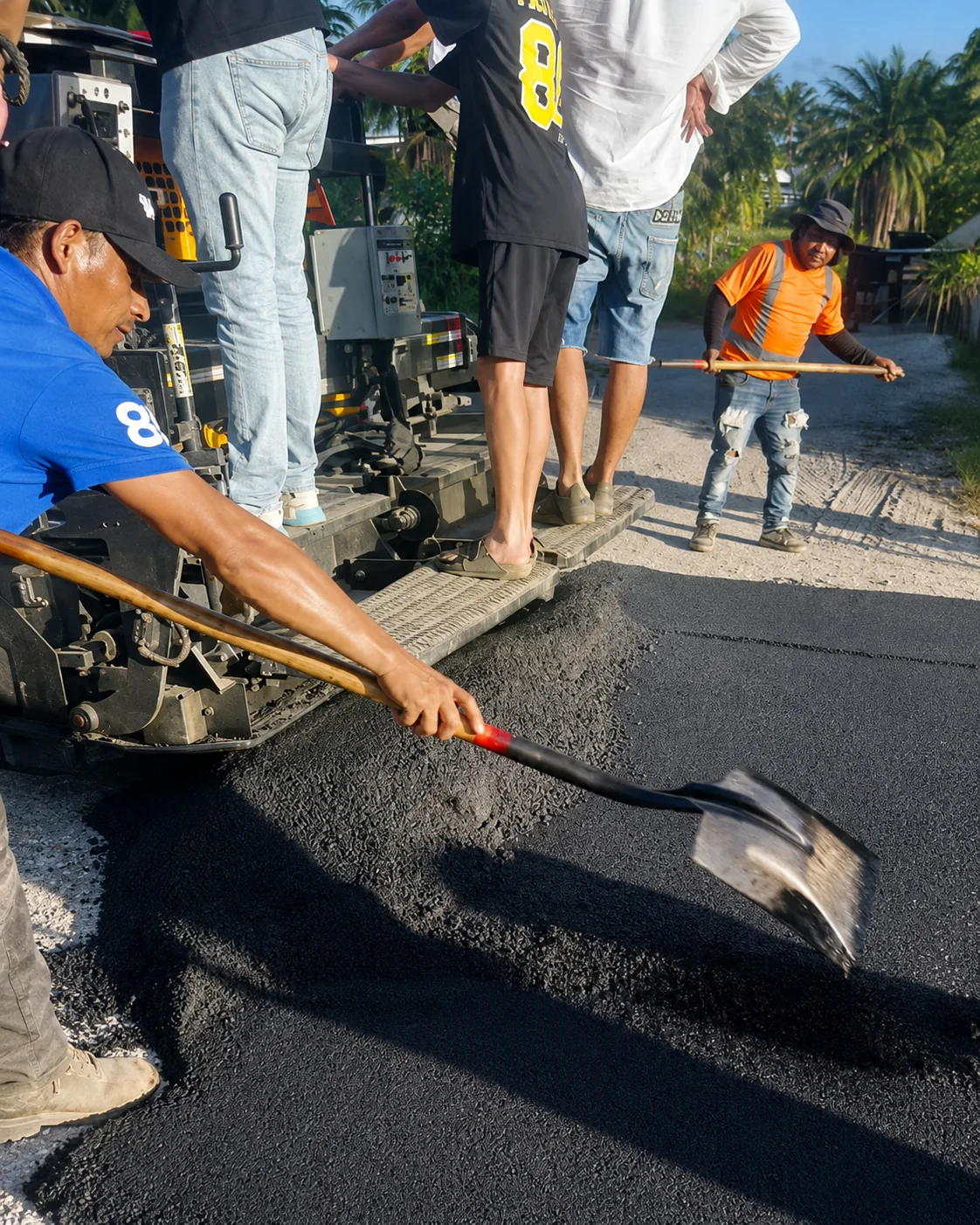
Our South Miami asphalt paving project documents paver placement, roller compaction, edge and surface finishing, and delivery of a finished residential access road.
Get a site-specific paving scope
Request a site walk with 305 Underground Construction to evaluate pavement condition, base failure, drainage, access and whether repair, resurfacing or replacement is the appropriate next step.