
Quick answer: Florida drainage problems should be diagnosed by tracing where water enters, where it collects and where it can safely leave. Standing water, eroded driveway edges, saturated soil and runoff toward the house often point to grading, outlet or drainage-system issues that should be understood before installing a surface fix.
Florida stormwater drainage warning signs
| What you see | What it may indicate |
|---|---|
| Water against the foundation | Negative grade, downspout discharge or missing drainage path |
| Standing water in the yard | Low grade, poor outlet or saturated soil |
| Driveway edge washout | Concentrated runoff or poor edge drainage |
| Repeated potholes/settlement | Water entering and weakening the base |
| Erosion near an addition | Roof runoff or finished grades directing water toward new construction |
Start with the water's path
Walk the property during or immediately after heavy rain and note where water enters, pools and leaves. Look for downspouts that discharge beside the structure, soil sloping toward the home, erosion at pavement edges and low areas near walkways or additions.
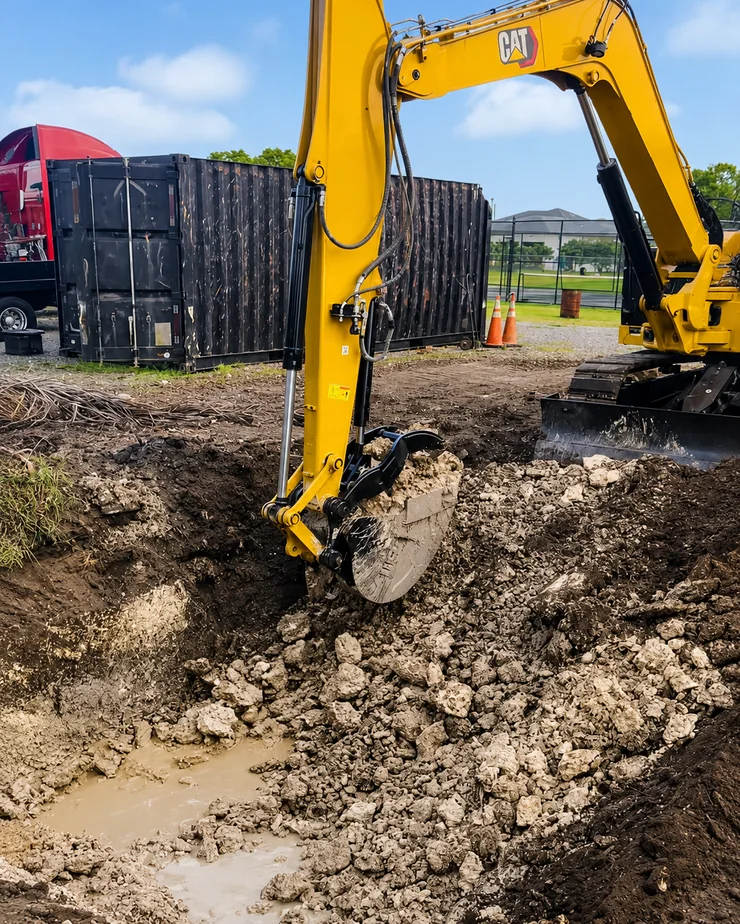
For a real 305 example of this scope, see our Florida drain and sewer trench project, showing field trench work in sandy Florida conditions.
Check the site before choosing a fix
Drainage work may involve grading, swales, catch basins, solid pipe, trenching or an outlet that can legally receive the water. The right solution depends on the lot, existing utilities, easements, flood conditions and local requirements.
A quick surface fix can move water toward a neighbor or create a new problem if the whole site is not considered. For statewide construction-stormwater context, review the Florida Department of Environmental Protection construction activity guidance.
305 field note: “Move the water away from this spot” is not a complete drainage plan. The outlet matters as much as the collection point.
What types of work can correct drainage?
- regrading low or negatively sloped areas;
- redirecting roof runoff;
- building or restoring swales;
- installing catch basins and solid pipe;
- trenching to an approved outlet;
- repairing eroded driveway or pavement edges;
- coordinating drainage with new construction or additions.
305 handles Drain & Sewer, Excavation and Asphalt work where those scopes are part of the correction.
Questions to bring to a drainage site walk
- Where should roof and surface water go?
- Is the current grade sending water toward the structure?
- Are utilities, septic systems or easements in the work area?
- Where is the legal and practical outlet?
- Will excavation or restoration be required?
- Could the proposed fix move water toward a neighbor or another low point?
- Does driveway or pavement work need to happen after drainage correction?
Drainage before additions, paving and site work
Drainage should be reviewed before a new addition, driveway or major site change alters finished grades. Fixing water movement after new concrete, paving or landscaping is complete can require unnecessary demolition.
If you are preparing for a contractor visit, use our Florida construction site walk checklist first.
Plan the next phase
Request a site walk with 305 Underground Construction to review grading, drainage, excavation and restoration needs together.